Product standards, which serve as a promise between businesses and consumers, are now on the verge of becoming an international standard, fulfilling the country's economic potential.
99,999
2026-03-06
Recently, a Memorandum of Understanding (MOU) on Halal cooperation was signed between the Saudi Halal Center and the Central Islamic Council of Thailand (CICOT). This marks a significant step in enabling Thailand's Halal certification to support the country's economy.
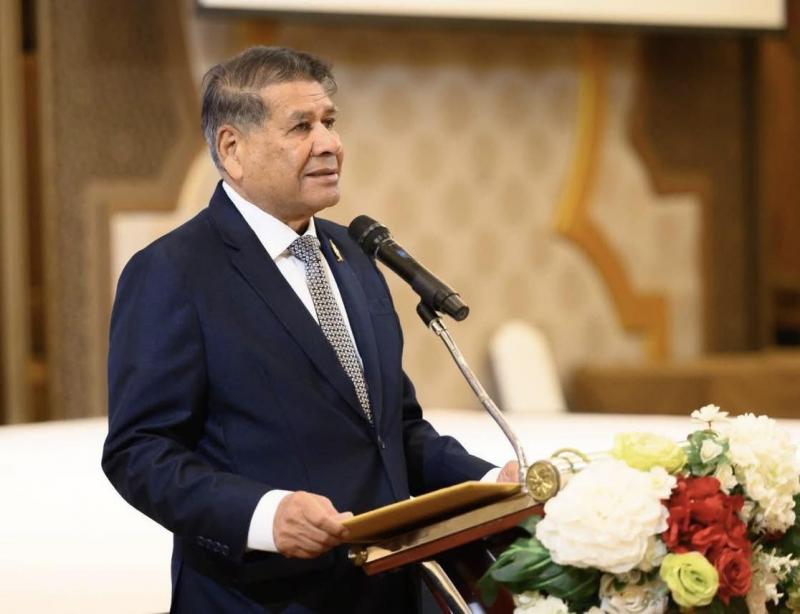
Pol. Maj. Gen. Surin Palare, Secretary-General of CICOT, told Bangkok Business News that Saudi Arabia, known for its leading role in Islamic affairs, has implemented the Halal Center project, which uses a single, globally recognized mark. A key condition of this cooperation is that Saudi Arabia will select countries with reliable Halal standards to participate in the MOU, such as Singapore, Turkey, Indonesia, and Thailand (CICOT).
"CICOT has worked hard for a long time to develop and maintain Thailand's Halal certification to be internationally recognized. This allows Thai export products to reach many countries without needing further quality checks. Saudi Arabia has inspected Thailand's standards multiple times to ensure their reliability."
Going forward, there will be no more problems with Halal standards in exports because, with this cooperation, we can export worldwide. The Thai Halal Standard Institute plays a crucial role in maintaining and developing Thailand's Halal standards, in line with the vision of cooperation to make Thai Halal more than just certification; it's about creating a global standard.
This signing is not just a bilateral agreement, but lays the foundation for a "new Halal ecosystem" through three pillars: Digital Innovation: Developing a digital Halal platform and QR code system for transparency and global traceability.
Global Recognition: Mutually recognizing Halal standards and marks to open doors to the global Muslim market freely and securely. Human Capital: Jointly developing a Global Halal Academy to create internationally-level experts.
Thai products can be exported globally without obstacles thanks to the mutual recognition of standards between CICOT and SFDA (the strictest and most reliable standards in the GCC: Gulf Cooperation Council, comprising six countries: Bahrain, Kuwait, Oman, Qatar, Saudi Arabia, and the United Arab Emirates). This will allow Thai products with the Halal mark to directly enter the Middle Eastern and global Muslim markets, reducing redundant inspection procedures and time.
The international recognition of the "Halal Thailand" standard guarantees that Thailand's halal certification system meets global standards, building confidence among trading partners in Europe, America, and Asia. This results in "Halal Thai" becoming a brand of quality and safety trusted by consumers worldwide.
Pol. Maj. Gen. Surin added that currently, more than 200,000 items have received the halal certification, representing exponential growth reflecting the increasing export of Thai halal products, which is a major source of income for Thailand. However, the role of the halal certification will not stop there, as tourism with the halal certification is another important channel for generating income for Thailand through the halal standard and certification.
"I've observed that most flights to and from the Middle East are almost fully booked. This may be one indicator that the Middle Eastern group, which places great importance on halal, is interested in and increasing its travel to Thailand. Therefore, the halal standard should not be limited to food." "But it must include cosmetics, spa services, or even services in restaurants."
Therefore, it is necessary to build understanding and expand cooperation more through the Grand Halal Bangkok 2026 event from July 15-17, 2026 at BITEC, which will be an opportunity to understand halal standards, build collaborative networks to expand the potential of the Thai economy and businesses for sustainable growth.
"I think this Grand Halal Bangkok 2026 will increase exports and tourism. We are discussing in the central committee how we can support the country's income going forward, especially in the area of Muslim restaurants. We need to help each other with this because CICOT has actually done this before, certifying 3,000 restaurants to accommodate the increasing number of Muslim tourists in Thailand."
In addition, CICOT is considering making the halal certification process easier and reducing the steps, while maintaining strict standards. This can be helped by technology.
"Thailand is not a Muslim country, so we may not be able to compete with Muslim countries in terms of credibility, but we will maintain the strong standards of Thailand as best as we can."